
Wedding in 12 Months? Your Invisalign Timeline, Mapped Out
Key takeaways
- Most mild-to-moderate cases fit comfortably inside a 12-month wedding runway when you start early.
- Consistent wear of about 20 to 22 hours a day is the single biggest factor in finishing on time.
- Tray counts usually range from a handful for minor spacing to 30 or more for bigger shifts.
- Pairing whitening with your final trays gives you a camera-ready glow for the big day.
- Booking 12 to 14 months ahead leaves room for refinements without panic.
Picture the first dance, the close-up portraits, and that one photo your family frames for the next thirty years. Now picture the smile you want in every single one. A wedding gives you a date on the calendar and a very good reason to finally straighten your teeth, and Invisalign is quietly one of the most wedding-friendly ways to do it. This is your countdown, mapped out month by month, so your smile peaks at the exact moment the photographer says “look at each other.”
Answer First: Can You Finish Invisalign in 12 Months Before Your Wedding?
Yes, for most mild-to-moderate cases, 12 months is enough time to finish Invisalign before a wedding, provided you start promptly and wear your aligners faithfully. The catch is simple: the clock does not pause for busy seasons, cold feet, or forgotten trays.
The short answer for most mild-to-moderate cases
If your teeth need light crowding fixed, small gaps closed, or minor rotations nudged into line, a 12-month plan is comfortably within reach. These are the cases Invisalign handles most predictably. A review of clinical evidence found that clear aligners are reliably effective for mild-to-moderate corrections, which is exactly the range most people are chasing before a wedding. You can read the overview in this systematic review of aligner effectiveness.
Why 12 months is a realistic (but case-dependent) window
Twelve months works because it leaves room for the real plan and the backup plan. Active movement often wraps up in eight to ten months, which leaves a cushion for small adjustments called refinements plus whitening at the finish line. Deeper bite corrections or major rotations can stretch longer, so the honest answer is that your timeline depends on your starting point. That is why the single most valuable thing you can do is get evaluated early rather than guessing from a wedding blog.
How Invisalign Treatment Time Actually Works
Invisalign treatment time is set by how far your teeth need to travel and how consistently you wear the trays that move them. Think of each aligner as one small, planned step, and the total number of steps as your map.
What determines your number of aligner trays
Your tray count is built from a digital plan that breaks your entire transformation into tiny movements. Each tray shifts teeth a fraction of a millimeter, then hands off to the next. The more correction you need, the more trays in the series. Dr. Kai Su, a Platinum Provider at KS Dental designs each plan around where your teeth are today and where they need to be by your date, not around a generic average.
Mild, moderate, and complex cases compared
Not every smile starts in the same place, and the plan reflects that. The table below shows how case complexity usually maps to a rough timeline. Treat it as a compass, not a contract, since your own evaluation sets the real numbers.
| Case type | What it usually involves | Typical timeline |
| Mild | Minor crowding, small gaps, slight relapse after old treatment | About 4 to 8 months |
| Moderate | Noticeable crowding, spacing, mild rotations | About 9 to 15 months |
| Complex | Significant bite correction, larger rotations, multiple issues | 18 months or more |
Why wear time (20-22 hours a day) makes or breaks your timeline
Here is the part no brochure dramatizes enough: your aligners only work while they are on your teeth. The recommended routine is to wear them around 20 to 22 hours a day, every day, removing them only for brushing, flossing, and cleaning. Skip hours here and there, and your teeth simply do not reach the next tray’s position on schedule, which pushes your finish date later. Research on what makes aligners succeed points to consistent wear as a leading factor, as summarized in this review of predictability and success.
Your 12-Month Invisalign Wedding Countdown, Month by Month
A wedding smile is a project with a deadline, so it deserves a project plan. Here is how a typical 12-month runway unfolds, step by step, from the first scan to the last portrait.
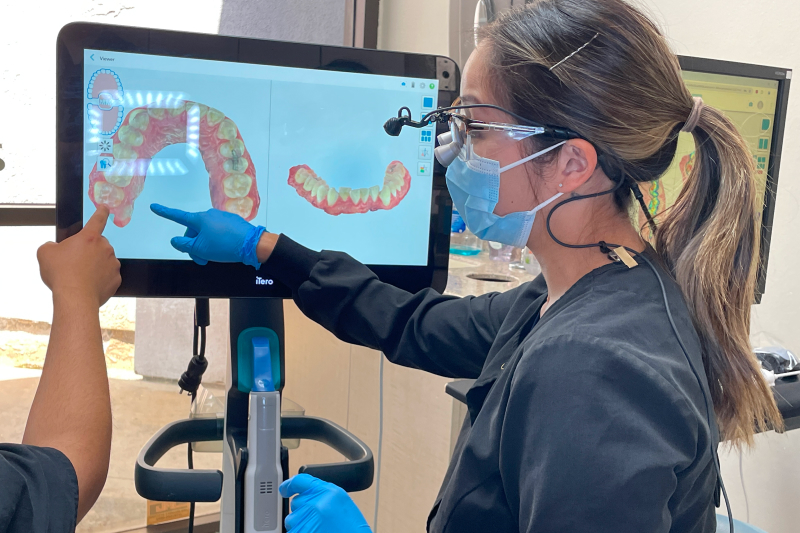
1 | Months 12 to 11: Consultation, scans, and your treatment planYou start with an evaluation and a digital scan that maps your teeth in detail. From there, your plan is built, your trays are ordered, and you often get a preview of your projected final smile. Starting this far out is the single smartest move, because it banks time for anything unexpected. |
2 | Months 10 to 4: Active aligner wear and refinementsThis is the long, quiet middle where the real change happens. You move through your tray series, swapping to the next set on the schedule your provider gives you, with periodic check-ins. If a tooth is lagging slightly behind the plan, a refinement set is ordered to fine-tune the result. |
3 | Months 3 to 1: Final trays, whitening, and the photo-ready finishWith alignment nearly complete, attention turns to the finishing touches. This is the ideal window to add professional whitening so your newly straightened teeth look bright in close-ups. Your smile is settling into its final shape just as invitations are going out. |
4 | Wedding week: retainers and keeping your smile setBy your wedding week, the heavy lifting is done, and the focus shifts to holding everything in place with a retainer. You arrive at the aisle with a smile that looks effortless, even though you planned every step of it. |
| A note from Dr. Kai Su, DMD at KS Dental“The couples who finish calm and confident are almost always the ones who booked early and wore their aligners without excuses. Time and consistency do the heavy lifting. My job is to design the plan around your date, and your job is to keep the trays in. That partnership is what gets you camera-ready.” |
How Many Invisalign Trays Will You Need in 12 Months?
In a 12-month plan, most people wear somewhere between roughly 12 and 30 trays, though the exact number is set entirely by your case. Trays are progressed on a schedule, so a higher count does not always mean a longer treatment.
Typical tray counts by case complexity
Minor corrections may need only a handful of trays, while fuller transformations can run to 30 or more. The number itself is less important than the movements each tray delivers. Two people can both finish in a year with very different tray counts because their teeth started in different places and progressed on different schedules. Your plan is tailored, and the tray count is simply the math of your personal map.
What refinements are and how they affect your schedule
Refinements are a normal, built-in part of many Invisalign journeys, not a sign that something went wrong. If a few teeth do not land precisely where the plan intended, a fresh scan is taken and a short additional set of trays is ordered to polish the result. Because refinements add a few weeks to a few months, starting early is what keeps them from colliding with your wedding date. Thoughtful planning from the very first visit reduces surprises later, a point reinforced in this overview of treatment planning protocols.
What Affects Whether You’ll Finish on Time
Three things decide whether you cross the finish line on schedule: how consistently you wear your trays, how your teeth respond to planned movements, and how healthy your mouth stays along the way. Two of those are largely in your hands.
Patient compliance and consistent wear
Compliance is the headline, and it is wonderfully simple. Keep your aligners in for the full daily hours, swap trays exactly when told, and show up for your check-ins. People who treat the 20-to-22-hour routine as non-negotiable are the ones who tend to finish as planned. The aligners cannot move teeth from a nightstand drawer.
Attachments, elastics, and tooth-movement predictability
Some movements need a little extra grip, so your provider may add small tooth-colored attachments or recommend elastics to guide specific teeth. These are quietly powerful because they improve how predictably teeth follow the plan. They blend in and rarely draw attention, yet they can be the difference between a result that lands on schedule and one that drifts.
Oral health during treatment
Healthy gums and teeth move more predictably, and keeping things clean matters more than usual when you wear trays. Brush and floss diligently, and keep up with routine visits so nothing interrupts your progress. Clear aligners can actually make daily cleaning more straightforward for many people, as noted in this analysis of oral health during treatment.
Invisalign Cost and Value for Your Wedding Smile
Invisalign for a wedding is best thought of as an investment in a result that shows up in every photo and lasts far beyond the day itself. What you pay reflects your case complexity, the number of trays, and the care included along the way.
Is $3,000 a good price for Invisalign?
For a straightforward, limited case, a figure around 3,000 dollars can be very reasonable, while fuller transformations with more trays and refinements typically cost more. Price alone is not the whole story, because the real value is in the planning, the check-ins, and the finishing details that make the result look natural. The most useful number is the one quoted after an evaluation of your actual teeth, since that is the only figure built around your smile and your date.
What’s included and how to budget before the big day
A clear quote usually covers your scans, your full tray series, scheduled progress visits, and the refinements needed to land the result. When you budget, factor in the finishing touches too, such as whitening and a retainer to protect everything afterward. Ask for the complete picture up front so there are no surprises as the wedding nears. For current pricing on Invisalign in our office, reach out directly and we will walk you through the details tied to your case.
| Budget tipAsk your provider to spell out exactly what the quote includes, especially refinements and retainers. Knowing the full scope early lets you plan payments calmly instead of scrambling as your date approaches. |
Tips to Stay On Track (and Look Great in Photos)
Finishing strong is mostly about building small habits that run on autopilot, plus a few smart choices near the finish line. Here is how to protect both your timeline and your photos.
| Use theseA phone reminder for tray changes and daily wearA travel case kept in your bag or jacketA soft toothbrush and floss for cleaning trays and teethScheduled check-ins marked in your calendarProfessional whitening timed to the final stretch | Avoid theseLeaving trays out longer than your routine allowsSkipping progress visits when life gets busyStoring aligners in a napkin where they get tossedStarting treatment too close to the wedding dateHome whitening gadgets without professional guidance |
Managing aligners at the reception and rehearsal dinner
Big celebrations are easy to navigate when you keep your routine in mind. Plan to wear your aligners throughout the festivities, taking them out only for your usual cleaning routine, and keep your case handy so you always have a safe place for them. A little planning means you stay on schedule without thinking about it, even during the busiest weeks of wedding season.
Pairing Invisalign with professional whitening
Straight teeth and bright teeth are a powerful pairing for photos, which is why the final stretch is the sweet spot for whitening. Once your teeth are settled into their new positions, professional whitening gives you an even, camera-friendly finish. Doing it at the end means you light up every close-up without any awkward timing.
Start Your Wedding Smile Timeline in Westminster, CA
The best time to begin your wedding smile plan in Westminster, CA is 12 to 14 months before your date, because that window gives your plan room to breathe. Starting early is not about rushing; it is about removing the pressure entirely.
When to book your first consultation
Book your first visit as soon as your wedding date is set, ideally more than a year out. That initial evaluation tells you exactly what your case needs and whether a comfortable 12-month plan fits. The sooner you have that answer, the sooner you can relax and focus on everything else on the wedding to-do list.
Why starting early protects your timeline
Early starts build in a cushion for refinements, life events, and the little surprises that every long project brings. When you leave time on the calendar, a small delay never becomes a crisis, and whitening at the end feels like a bonus rather than a scramble. If you are planning a wedding and dreaming of the smile to match, call us at (714) 847-2232 to map out your personal countdown.
Call today or use the form below to contact our office. Call us today: 714-847-2232.
Dr. Kai Su, a Gold+ Invisalign provider to Platinum+ Invisalign provider, and a respected dentist in Westminster, CA, is known for his ethical approach and commitment to ongoing education. Dr. Kai Su provides comprehensive dental care, with degrees from the University of Wisconsin-Madison and the Boston University School of Dental Medicine, and advanced training in New York City. He volunteers in underserved communities and is certified in Invisalign. When not practicing, he enjoys basketball and spending time with his family.
Frequently asked questions
| Q: How long did Billie Eilish have Invisalign?Billie Eilish has shared that she wore Invisalign for a few years, which reflects how individual treatment time varies with each case. Celebrity timelines make a helpful point: your own length is set by your starting position and how consistently you wear your trays, not by anyone else’s experience. For many mild-to-moderate cases, the active phase is much shorter, which is exactly why a wedding-focused plan can fit inside a single year when you begin early and stay consistent. |
| Q: How many Invisalign trays for 12 months?A 12-month plan commonly involves somewhere between roughly 12 and 30 trays, though the exact count is tailored to your teeth. Each tray delivers a small, planned movement, and your provider sets how often you progress to the next one. A higher tray count does not automatically mean longer treatment, because trays can be scheduled closer together depending on your plan. The number that matters is the one calculated from your own scan during your first visit. |
| Q: Is $3,000 a good price for Invisalign?For a limited or straightforward case, a price around 3,000 dollars can be very reasonable, while fuller corrections with more trays and refinements usually cost more. The real value lies in the planning, the progress visits, and the finishing details that make your result look natural and last. Always ask for a complete quote that spells out what is included, such as refinements and a retainer, so you can budget confidently. For current Invisalign pricing in our office, reach out and we will walk you through the details for your case. |
| Q: How long is too long to keep Invisalign out?Aligners are designed to be worn around 20 to 22 hours a day, so you should keep them out only for brushing, flossing, and cleaning. Leaving them out beyond your short cleaning routine slows your progress, because teeth move only while the trays are on. Over many days, lost hours can push your finish date later, which is a real concern when a wedding is on the calendar. The safest habit is a simple one: keep your aligners in whenever you are not actively cleaning your teeth or your trays. |
Book your appointment here and take Google Maps directions to reach us!
Remember: Start early, wear your aligners around 20 to 22 hours a day, and keep every check-in so your smile peaks right on your wedding date.
Disclaimer: This article is for general information only and is not a substitute for personal dental advice; your timeline and results depend on an in-office evaluation.