Can Invisalign Fix My Specific Smile Concern?
| Quick answerFor most mild-to-moderate concerns, such as crowding, gaps, and many bite issues, Invisalign can reliably straighten teeth. Severe misalignment, large jaw discrepancies, or untreated gum disease and decay may require braces, a combined approach, or preliminary care first. |
| 20-22 hrs/dayRecommended aligner wear time | Mild-moderateBest-suited case difficulty | 3D scanHow we simulate your result |
| Key takeawaysInvisalign predictably treats crowding, spacing, and mild-to-moderate bite problems in cooperative patients.Severe malocclusion, large skeletal jaw discrepancies, and active gum disease or decay may disqualify you until addressed.Clear aligners work best when worn consistently, roughly 20 to 22 hours per day.A digital scan and 3D simulation let us show you a realistic outcome before you commit.An honest in-person evaluation is the only reliable way to know whether Invisalign is right for your specific case. |
Quick Answer: Can Invisalign Fix Your Smile Concern?
For most mild-to-moderate smile concerns, the answer is yes. Invisalign uses a series of clear, custom aligners to gradually move teeth into better positions, and it handles common issues like crowding, spacing, and many bite problems well. The honest answer for your specific case, though, depends on how your teeth and jaws are positioned and how your gums and existing dental work look today.
The short answer for most mild-to-moderate cases
If your concern is crowded front teeth, a gap between your teeth, or a slightly off bite, Invisalign is often a strong choice. Research reviewing clear aligner outcomes shows they move teeth effectively for many alignment goals, particularly when cases are well selected and patients wear their trays as directed systematic review comparing aligners and fixed appliances.
When Invisalign may not be the best option
Invisalign may not be the ideal path when the problem involves severe rotations, large vertical tooth movements, or a significant mismatch between the upper and lower jaws. In those situations, fixed braces or a combined plan can offer more control. Active gum disease or untreated decay also needs care first, because moving teeth through an unhealthy foundation is not safe.
| A note from Dr. Kai Su“I tell every patient the same thing: aligners are a tool, not a magic tray. When a case fits, and the patient wears the aligners consistently, the results can be excellent. My job is to be honest about when a different approach will serve your smile better.” – Dr. Kai Su, DMD, Invisalign Platinum Provider |
Smile Concerns Invisalign Can Typically Correct
Invisalign can typically correct crowding, spacing, and several common bite issues in cooperative patients. Below are the concerns we see most often and how aligners address each one.
Crowded teeth
Crowding happens when there is not enough room for teeth to sit in a straight line, so they overlap or twist. Invisalign creates space through controlled movement and, in some cases, gentle reshaping between teeth, then guides crowded teeth into alignment. Mild-to-moderate crowding is one of the most predictable things aligners handle.
Gaps and spacing
Gaps between teeth respond well to clear aligners because closing space is a movement aligners perform reliably. Whether you have a single gap between your front teeth or several small spaces, aligners can bring teeth together into even contact for a more uniform smile.
Overbite, underbite, and crossbite
Many bite concerns can be improved with Invisalign, especially mild-to-moderate cases. A narrative review found aligners can be effective for correcting Class II relationships in adults, which are common overbite situations; when treatment is planned, review aligners in Class II malocclusion. Underbites and crossbites can also be addressed in appropriate cases, though more severe skeletal versions may need additional treatment.
Open bite
An open bite, where the front teeth do not meet when the back teeth are together, can often be improved with aligners. One clinical study reported meaningful open-bite correction with Invisalign, particularly in dental rather than skeletal cases study on Invisalign open-bite correction.
Mild relapse after prior orthodontics
If you had braces or aligners years ago and your teeth have shifted, Invisalign is often an excellent fit. Relapse cases usually involve smaller movements, which aligners handle predictably and discreetly, so you can refresh your smile without a lengthy second round of treatment.
How Well Does Invisalign Work Compared to Braces?
Invisalign and braces both straighten teeth effectively for many patients, and for suitable cases the final results can be comparable. Braces still hold an edge for the most complex movements, while aligners offer comfort, appearance, and easier cleaning.
Where fixed braces still have an edge
Braces tend to have greater control over difficult movements, such as large rotations of round teeth, significant vertical repositioning, and the closing of large extraction spaces. For very complex cases, a fixed appliance or a hybrid plan may deliver a more predictable result.
| Invisalign often shines whenYou have mild-to-moderate crowding or spacingYour bite issue is dental rather than deeply skeletalYou want a discreet, comfortable optionYou can commit to wearing aligners consistentlyYou are correcting relapse after prior treatment | Braces or a combined plan may be better whenYou have severe crowding or rotationsThere is a large jaw size discrepancyTeeth need major vertical movementLarge extraction spaces must be closedConsistent wear will be difficult to maintain |
What Might Disqualify You From Invisalign?
The most common reasons Invisalign is not recommended are severe malocclusion, large jaw discrepancies, unresolved gum disease or decay, and an inability to wear the aligners consistently. Most of these are situations we can either treat first or plan around.
Severe or complex malocclusion
Very severe crowding, dramatic rotations, or teeth that need to move long distances may exceed what aligners can predictably achieve on their own. In these cases, we may recommend braces or a phased approach that uses multiple tools.
Significant bite or jaw discrepancies
When the upper and lower jaws differ significantly in size or position, the concern is skeletal rather than simply the position of the teeth. These cases sometimes need approaches beyond aligners alone, and honesty here protects your long-term result.
Oral health prerequisites
Active gum disease and untreated cavities must be resolved before any tooth movement begins. Moving teeth requires healthy supporting bone and gums. If we find decay or gum problems during your evaluation, we address them first, often as part of your general dentistry care, so your foundation is stable before aligners start.
Compliance and wear-time requirements
Invisalign only works when the aligners are actually in your mouth. You should plan to wear them all the time, removing them only for brushing, flossing, and cleaning the trays. If wearing them for roughly 20 to 22 hours a day is not realistic for your lifestyle, a fixed appliance that cannot be removed may serve you better.
How We Evaluate Your Specific Case in Westminster, CA
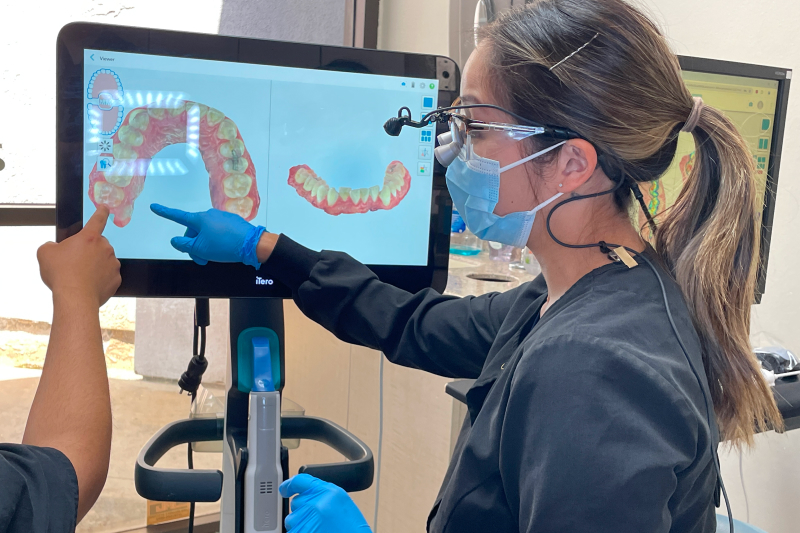
We evaluate your case using a digital scan, a 3D simulation of your projected result, and a candid conversation about your goals. This lets us tell you whether Invisalign is right for your specific smile before you commit to anything.
Digital scans and 3D treatment simulation
At KS Dental, we take a digital scan of your teeth rather than messy impressions. From that scan, we can build a 3D model of how your teeth are expected to move step by step. Seeing a preview of your projected smile helps you make an informed decision and sets realistic expectations.
Personalized consultation and honest recommendations
Dr. Kai Su reviews your scan, your bite, and your gum and tooth health, then gives you a straightforward recommendation. If Invisalign is a great fit, we explain the plan. If a different approach would serve you better, we say so. As an Invisalign Platinum Provider, Dr. Su has planned a wide range of cases and knows where aligners excel and where they do not.
Combining Invisalign with other treatments when needed
Sometimes the best smile comes from combining treatments. Aligners can be paired with attachments to improve control, or followed by small cosmetic refinements once teeth are aligned. In cases with health concerns, we sequence restorative care first, then straightening.
What to Expect During Treatment
Most patients move through a predictable series of aligners, wear them consistently, and finish with retainers to hold the result. Here is how a typical course unfolds.
1 | Scan and planWe capture a digital scan, map your movements, and review your 3D simulation together so you know the goal before you begin. |
2 | Wear your alignersYou wear each set of aligners all the time, removing them only for oral hygiene, and switch to the next set on the schedule we provide. |
3 | Progress checksWe see you periodically to confirm that teeth are tracking as planned and to add or adjust attachments as needed. |
4 | Refine and retainIf small adjustments are needed at the end, we plan refinement aligners, then fit retainers to keep your new smile stable. |
Typical timeline and aligner changes
Treatment length depends on how much movement your case requires. Simple concerns like a small gap or a mild relapse can be resolved in a few months, while broader corrections may take a year or more. You typically progress through a new aligner every one to two weeks as directed.
Attachments, refinements, and retainers
Small tooth-colored attachments are sometimes bonded to certain teeth to help aligners grip and produce specific movements. Refinements are extra aligners used near the end to fine-tune the result. Retainers are essential afterward, because teeth naturally tend to drift back without them.
Caring for your aligners and teeth
Keep your aligners and teeth clean throughout treatment.
| Do theseBrush and floss before placing aligners back inRinse aligners in lukewarm waterClean trays gently with a soft brushStore aligners in their case when out for hygieneWear aligners all the time except for oral hygiene | Avoid theseHot water that can warp the plasticColored or abrasive toothpaste on the traysLeaving aligners out for long stretchesWrapping aligners in a napkin where they get lostSkipping retainers after treatment ends |
Ready to Find Out If Invisalign Fits Your Smile?
The only reliable way to know whether Invisalign can fix your specific concern is to have a personal evaluation. We would be glad to scan your teeth, show you a preview of your result, and give you an honest recommendation. Call today or use the form below to contact our office. Call us today: 714-847-2232.
Dr. Kai Su, a Gold+ Invisalign provider to Platinum+ Invisalign provider, and a respected dentist in Westminster, CA, is known for his ethical approach and commitment to ongoing education. Dr. Kai Su provides comprehensive dental care, with degrees from the University of Wisconsin-Madison and the Boston University School of Dental Medicine, and advanced training in New York City. He volunteers in underserved communities and is certified in Invisalign. When not practicing, he enjoys basketball and spending time with his family.
Frequently asked questions
| Q: Can Invisalign fix a misaligned smile?Yes, Invisalign can fix many misaligned smiles, especially mild-to-moderate crowding, spacing, and common bite issues. Clear aligners gradually move teeth into better positions. Severe misalignment or large jaw discrepancies may require braces or a combined treatment plan, which we will confirm during your evaluation. |
| Q: Why don’t dentists recommend Invisalign for some patients?Invisalign may not be recommended when a case involves very severe crowding, large rotations, significant differences in jaw size, or when active gum disease and decay require care first. It also depends on consistent wear, so it is not ideal for patients who cannot keep the aligners in most of the day. |
| Q: What is the 5-year rule for Invisalign?There is no official 5-year rule that determines eligibility for Invisalign. Suitability is based on your current tooth and jaw position, gum and tooth health, and your ability to wear aligners consistently. The best way to know your options is a personal evaluation with a scan and simulation. |
| Q: What disqualifies you from getting Invisalign?Common reasons include severe or complex malocclusion, large skeletal jaw discrepancies, and untreated gum disease or decay that must be resolved first. An inability to wear aligners for roughly 20 to 22 hours a day can also make a fixed appliance a better choice. |
| Q: How long does Invisalign take to fix my smile concern?Treatment time depends on your case. Small concerns like a minor gap or a mild relapse can be resolved in a few months, while broader corrections may take a year or more. You typically advance to a new aligner every 1 to 2 weeks, as directed by your dentist. |
Book your appointment here and take Google Maps directions to reach us!
Remember: Invisalign works best for mild-to-moderate concerns and only when aligners are worn consistently, so an in-person evaluation is the best next step.
Disclaimer: This article is for general information only and is not a substitute for a personal examination and diagnosis by a licensed dentist.